A living map with a memory attached
Every engineering organization runs on unwritten knowledge: what breaks if you touch this, who to ask before you do, what someone promised to remember three reorgs ago. It lives in heads, chats, and hard-won scars – engineering lore, passed down by word of mouth. And every time someone leaves, part of the system leaves with them. Dydation writes it down where it belongs – and keeps it awake.
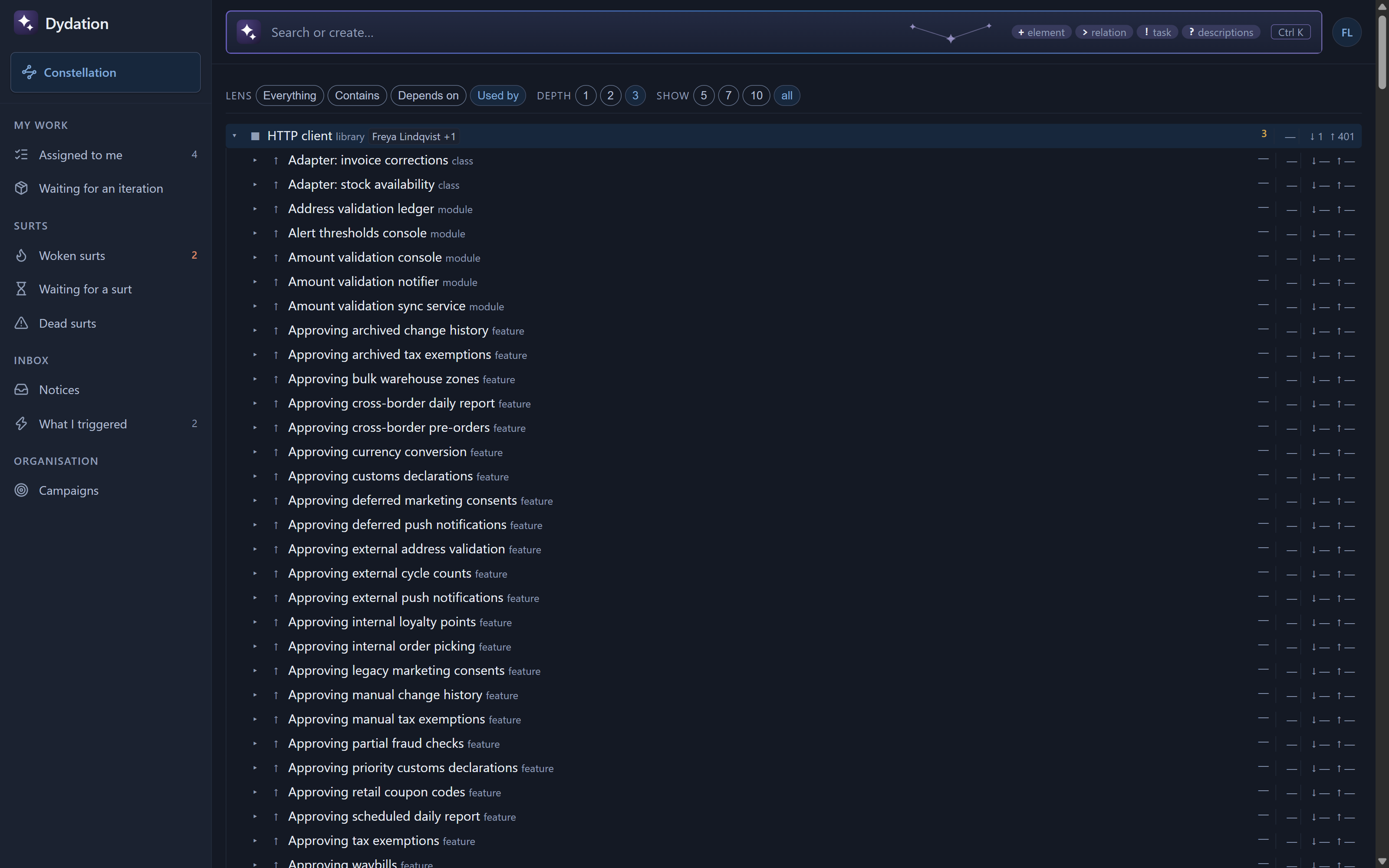
The map: elements and typed dependencies
Model your system at whatever granularity you actually think in – modules, features, libraries, configs, test environments, even rituals. Two typed relations carry the structure: has builds the tree, depends-on carries the risk. Expand the tree, follow the edges, and see the blast radius – down the tree and up – before you commit to a change.
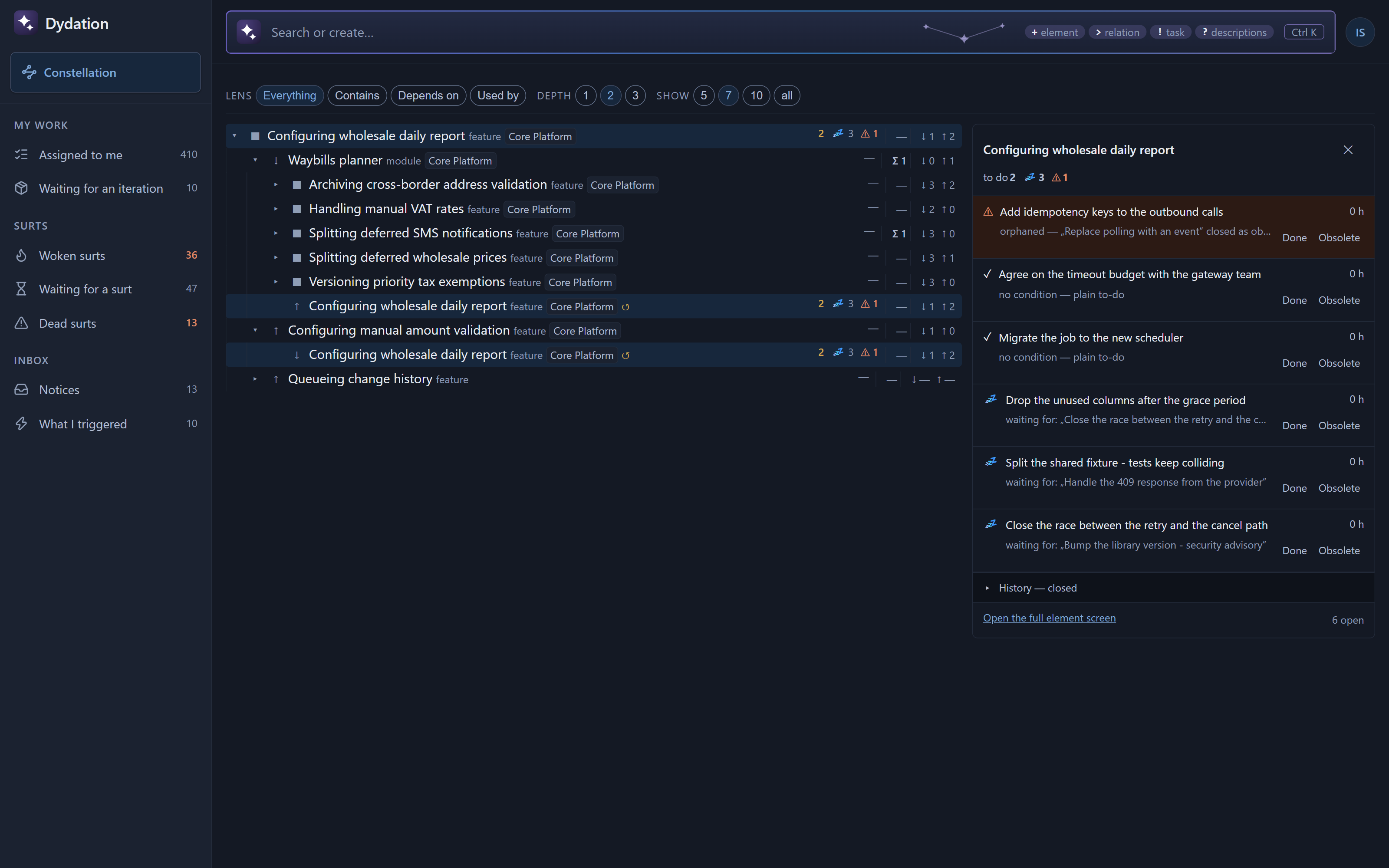
Dormant commitments – we call them surts
Pin a commitment to the exact node it concerns and give it a trigger: when that task closes, when this iteration opens, when someone reopens the thing you fixed. Until then it sleeps – no noise, no backlog rot. When the trigger fires, it wakes up and lands on the right person’s dashboard.
remember the invoice PDFs
→ landed with Marta · owns Billing
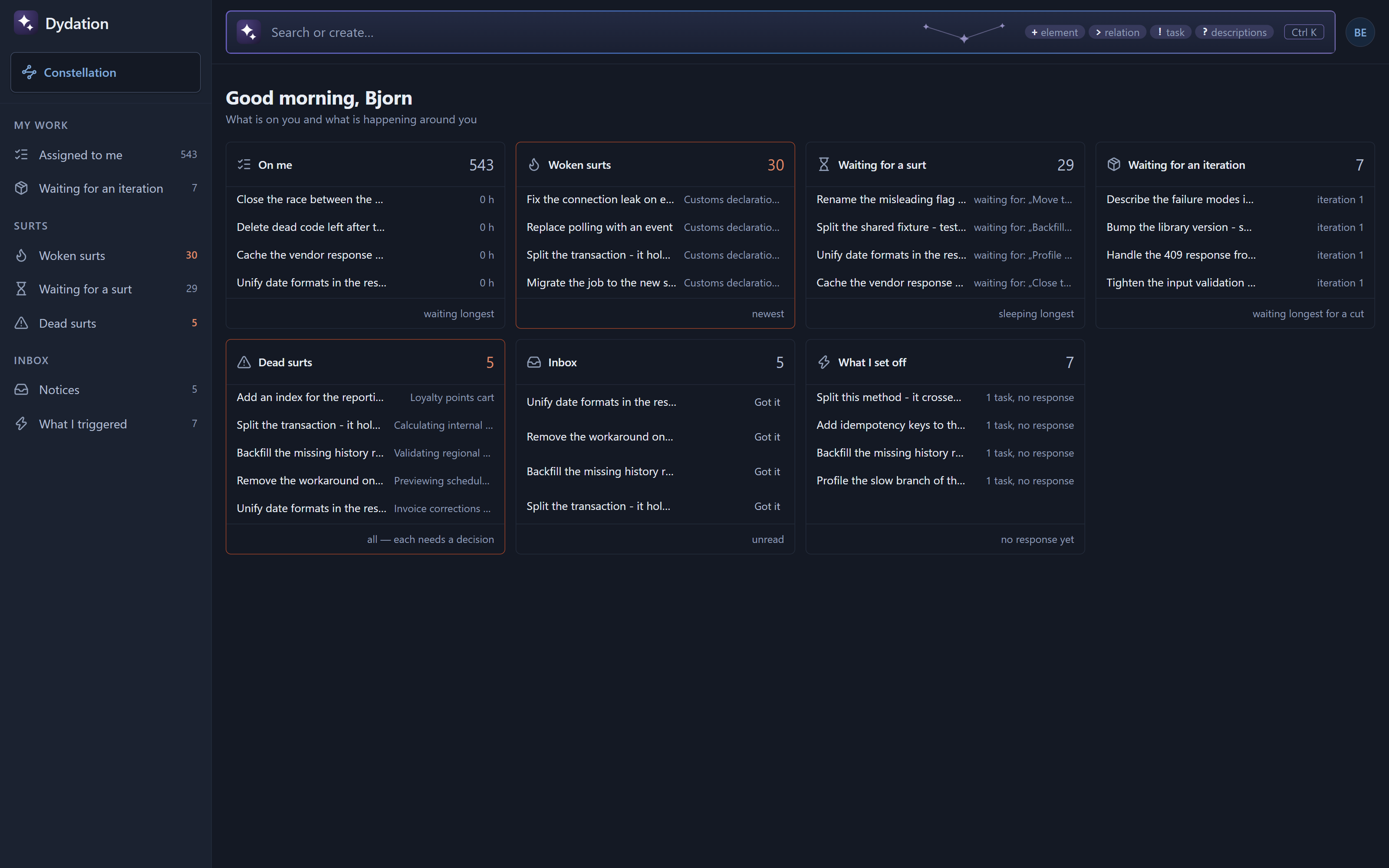
Ownership that answers
People and teams own elements, with inheritance down the structure and explicit exceptions where reality disagrees with the tree. Effective owners are always visible – so “who do I ask?” has an answer before the group chat does. When a commitment wakes, ownership is how it finds its person.
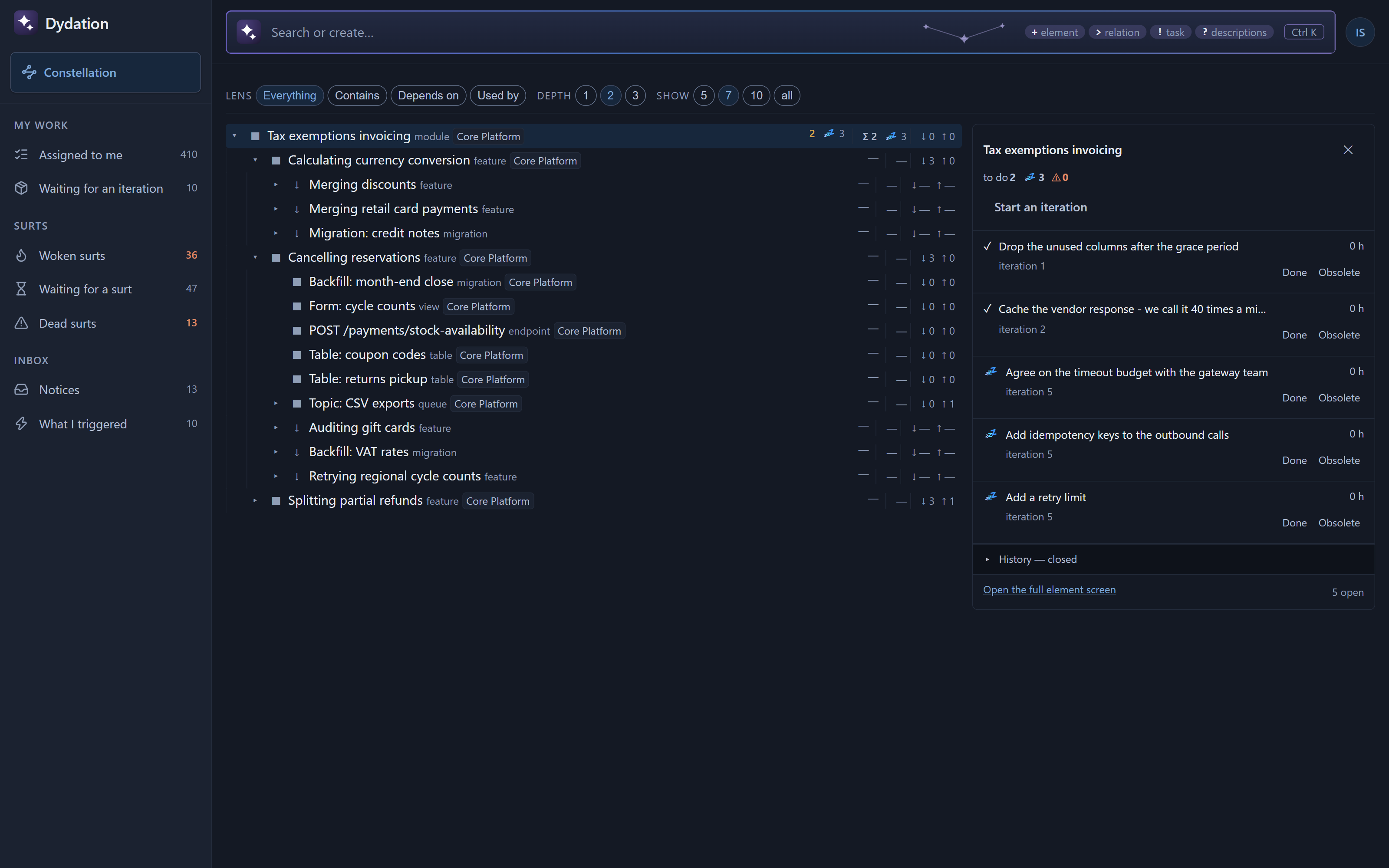
Iterations: work packages per element
Bundle a set of commitments on one element into an iteration and open it on demand – a package of work on that part of the system, with its own lifecycle. Architects can roll commitments out in bulk with campaigns.
Start from a file. Keep it honest by hand
Your scripts already know a lot of the map – export it and import it here. Imports are two-phase: a dry-run report shows every change and conflict before anything is written, and a whole run can be rolled back. Imports only add and update – the map never loses knowledge behind your back. Direct integrations with git and CI: planned.
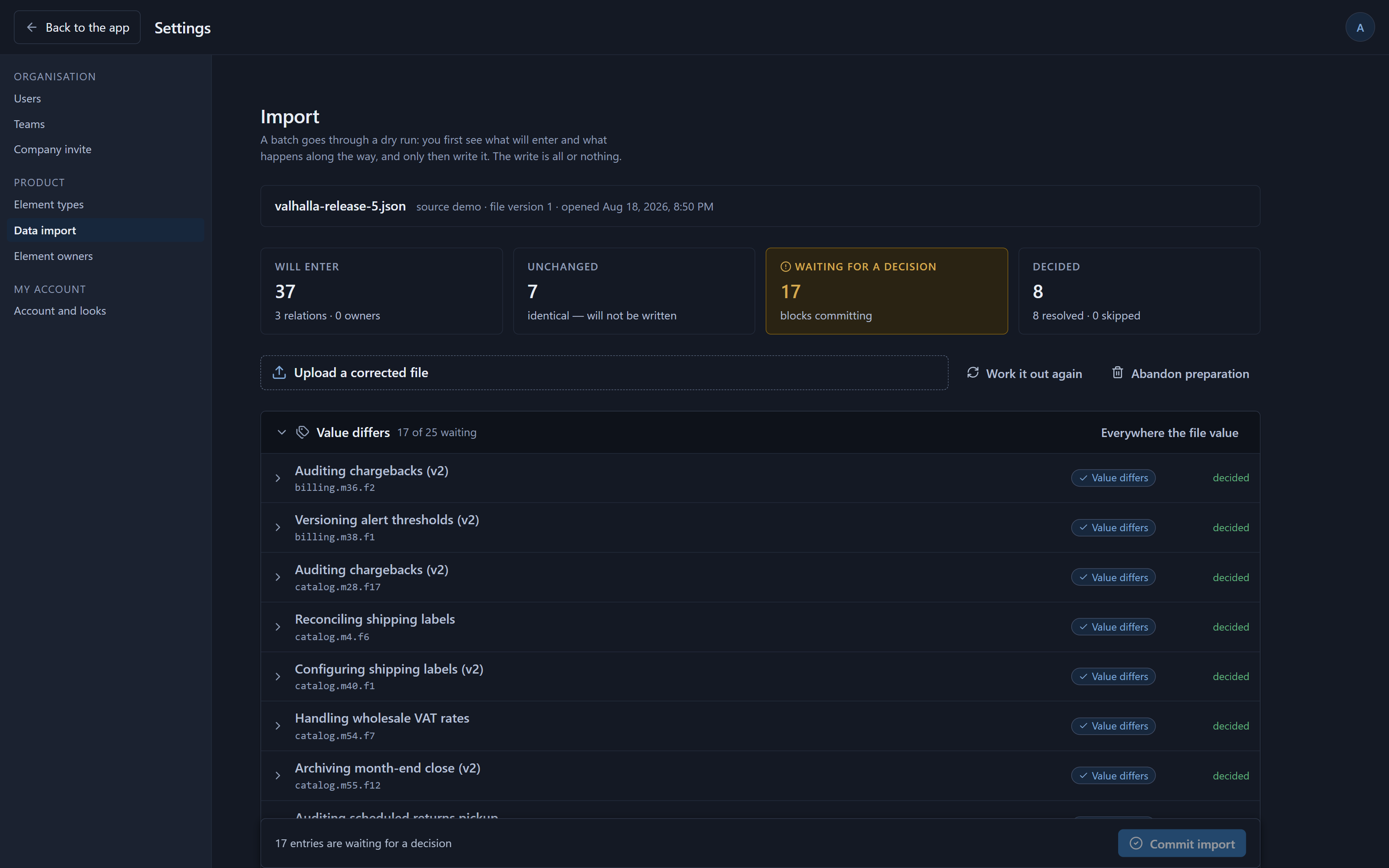
Engineering lore, on the record
Descriptions live on elements and on the edges between them – because half the lore is about the relationship, not the thing. All of it is searchable from one omnibox that also creates: type, confirm, done.
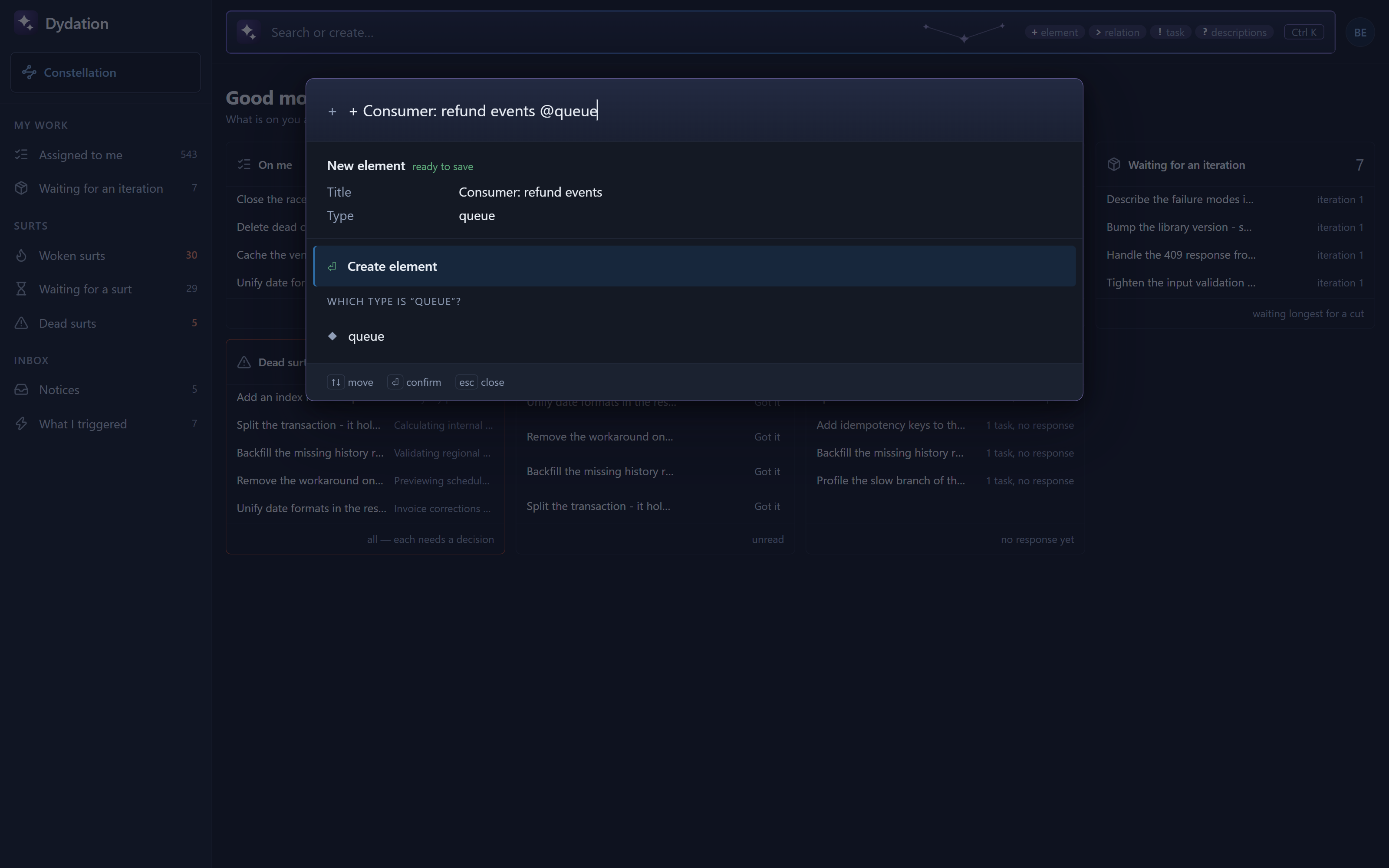
Search that knows the neighborhood
One box, keyboard-first. It finds elements by title – or through descriptions when you ask – forgives typos and accents, and every hit carries its parent, so five things named “retry policy” stay five different things.
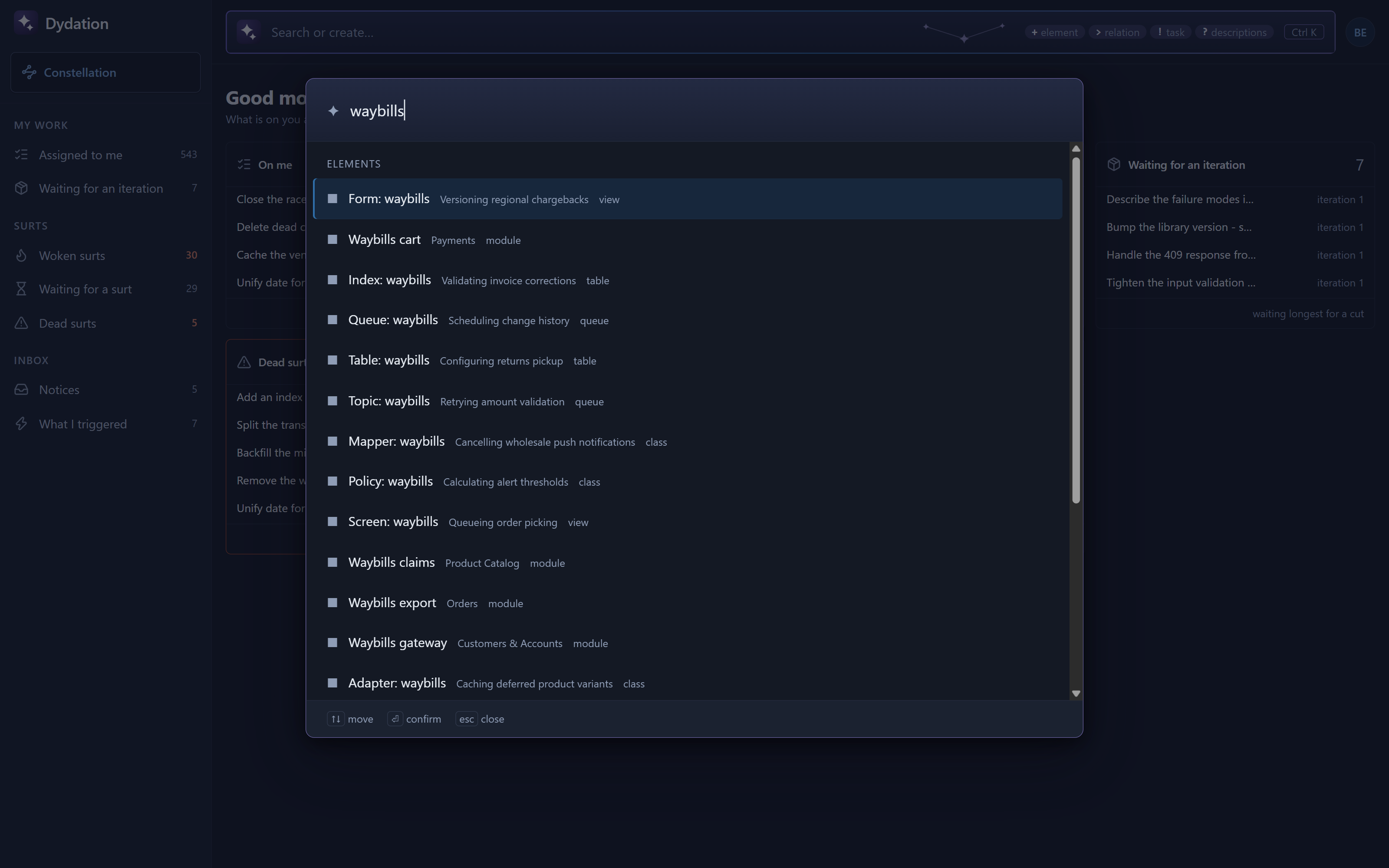
Screenshots from the demo workspace – fictional company, production-scale data.
Boring where it should be boring
Isolation
Every organization lives in its own database schema. Your map is yours – physically separated, not just filtered.
EU hosting
Servers in the European Union. Your data stays in the EU.
Nothing is deleted
Closing is soft and history is permanent – a memory tool that forgets would be a contradiction.
Roles & access
Flat, understandable roles. Every request is authorized on the server – nothing relies on hiding buttons in the UI.
Not a task tracker
Jira tracks the work you planned. Dydation remembers the work you’d otherwise forget.
People change jobs. The map doesn’t
Write to us about early access – we usually reply within two business days.